
On December 26, 2004, one of the world’s deadliest natural disasters occurred. Scientists called it the Samatra-Andaman earthquake. The rest of the world knows this devastation as the 2004 Indian Ocean tsunami, the South Asian Tsunami, the Indonesian Tsunami, or the Boxing Day tsunami. The earthquake that initially started the tsunami had a magnitude between a 9.1 and a 9.3. This high magnitude qualifies it to be the third largest earthquake recorded on a seismograph.
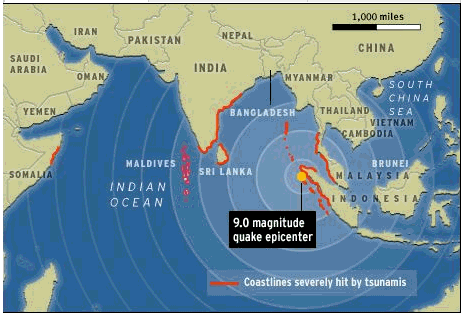


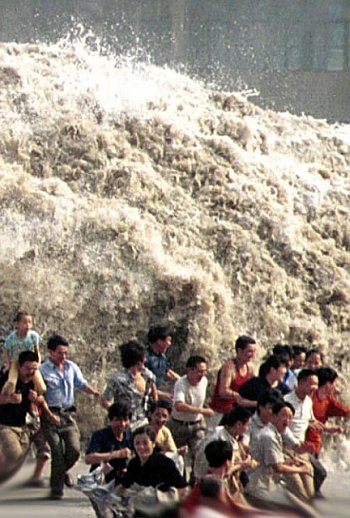
Although some people were able to recognize the signs that tsunami was
coming, most victims were caught completely by surprise. Indonesia had
the highest death toll, which was between 170,000 and 220,000. Hundreds
of people also died in Sri Lanka, India (Tamil Nadu), Thailand, Maldives, and
the Eastern coast of Africa. According to most records the death toll came to approximately
230,000 people. Many records show that around 1/3 of the deaths were
children.

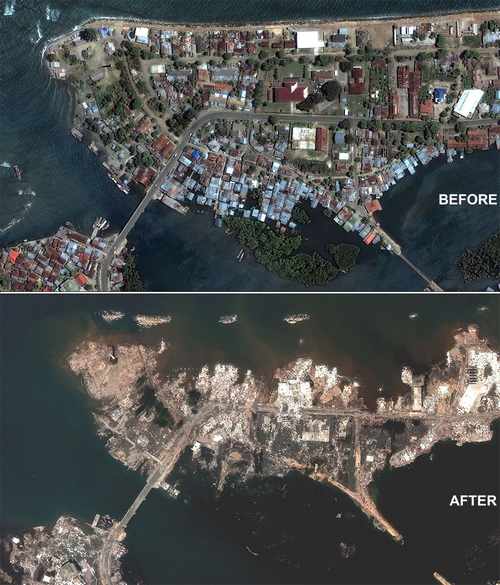
Great cities and landmasses went from being great communities to underwater burial grounds.
In addition to the hundreds of thousands of deaths, millions of people
were left without shelter, food, water, means of communication, and in many
cases, they did not even have a family to find comfort in. Soon after the
tsunami took place, the media began capturing photographs, filming the affects
of the disaster and posting information where people from all over the world
could see it. Immediately, organizations from all around the world began
responding to the desperate call of help from the millions of tsunami victims.
Their main goal was to get food and clean water to the survivors, and to
provide medical support to those who were injured and suffered health problems
because of the disaster. (The medical support was especially important
because the possibility of victims getting diseases was extremely high.)
_and_embarked_Carrier_Air_Wing_Two_(CVW-2),_move_supplies_from_a_truck_in_preparation_for_aerial_resupply_drops_by_SH-60_Seahawk_helicopters.jpg/220px-US_Navy_050102-N-9593M-088_Sailors,_assigned_to_USS_Abraham_Lincoln_(CVN_72)_and_embarked_Carrier_Air_Wing_Two_(CVW-2),_move_supplies_from_a_truck_in_preparation_for_aerial_resupply_drops_by_SH-60_Seahawk_helicopters.jpg)

People who knew of the tsunami
and the millions of people who had been affected began to take action to
provide relief and help in any way that they could. Some donated money.
Other generously gave food supplies and hygiene kits to be sent to those who
needed them. Others actually went to affected areas and gave countless
hours cleaning up the areas, serving the people, and providing comfort and
relief to victims. Some even opened up their homes for refugees to live
in so that they would have a place to stay and receive the things they needed.
There were also those who used their professions to help out.
Doctors provided medical supplies and support to the sick and injured and
construction crews rebuilt homes.
I was 13 at the time that the
tsunami occurred. Even though I was young, I remember reading about what
had happened, and hearing updates on the news. I also remember looking at
pictures and feeling heartache for the people who were hurt or killed by the tsunami
and for those who were left without a home or family. I remember working
with organizations making hygiene kits for the victims and sending toys and
clothes to the little children who had lost everything. Millions of
people around the world were doing the same types of things.
In addition to individual efforts
to provide relief, countries also began to respond to the call for help by
donating generous amounts of money for the clean up and reconstruction of the
affected areas.
I think it is amazing how much good can be done and how close people can
be brought together through the media even if oceans separate them.

Ayo gabung Disini
ReplyDeleteBagi bagi bonus www.s128.net
ReplyDeletemau yang asik ? adu ayam
ReplyDeletesitus donwload aplikasi sabungayam.net hp terbaru
ReplyDeleteayo bergabung dengan bolavita khusus new member lgsg di berikan 10%
ReplyDeletetanpa ribet dan masih banyak bonus2 lain nya
semua di berikan tanpa ribet pelayanan terbaik 24 jam
depo wd secepat kilat ^^
adu ayam pisau
info lbh lanjut :
WA: +628122222995