Thursday, November 17, 2011

Hurricane Katrina


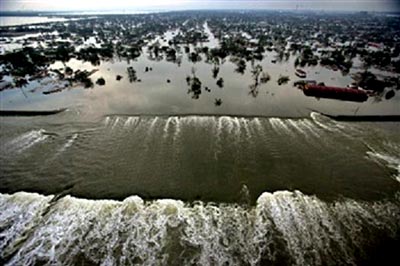
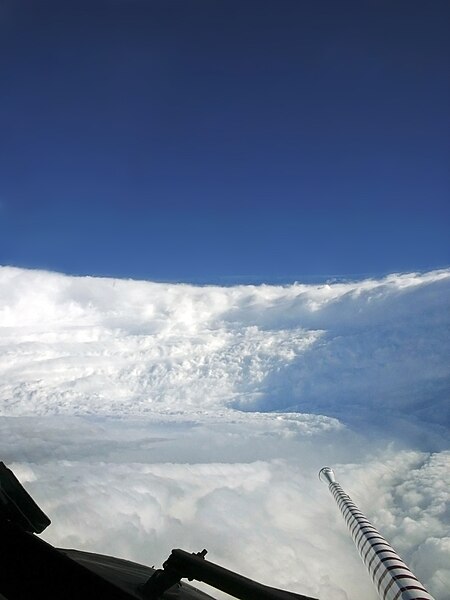
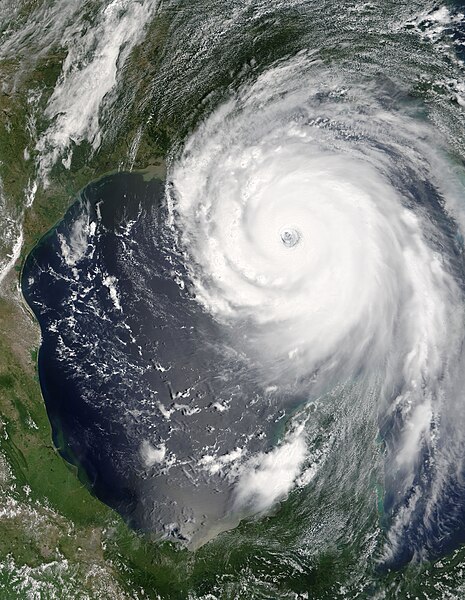
Hurricane Katrina occured in the US during the 2005 atlantic hurricane season.  It is known to be one of the five strongest hurricanes that have affected the United States, and according to recored, the sixth strongest overall.


Hurricane Katrina killed over 1,836 people and the destruction caused the government $81.2 billion in repairs.  Thankfully, because the media was able to convey information so quickly, many nations all around the world generously helped Americans out by providing relief and money.


The media was actually a huge blessing during this disaster because people in the United States who were in the path of the Hurricain were able to view the progress of the storm and move out of harms way before it was too late.  Also, because of the medias ability to spread the news about the storm, thousands of people answered the call of help and offered there services and their funds.  They rebuilt homes and communities.
Even after Hurricane Katrina, funds were gathered and helping hands reached out.  Many websites were created to inform people.  


------------------------------------------------------------------------------------------------------------------------

News channels also continued to update people on what was going on.  The entire nation was able to sympathise with victims of the hurricane.  Media helped the survival rate to increase because of the forewarning that it provided as well as the relief it innitiated during and and after the storm.  In a way, the media could be considered the eye of the storm because although aweful things were happening all around, the media was able to provide so much good.


Monday, November 14, 2011

2004 Indian Ocean Earthquake


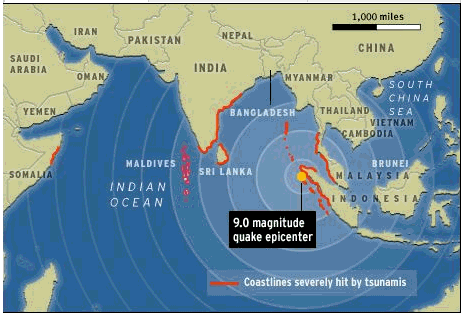
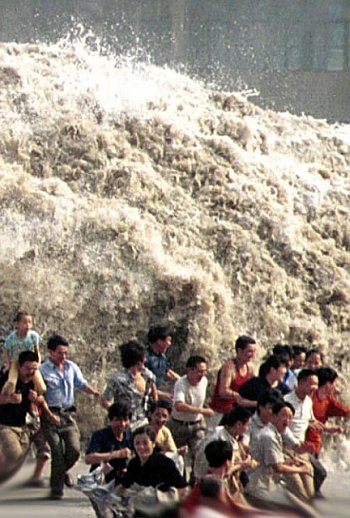
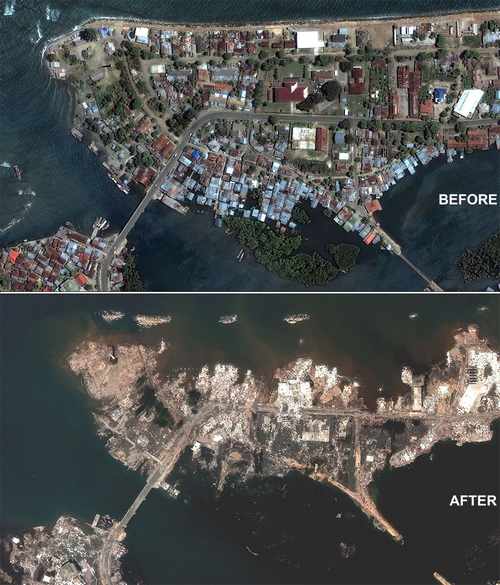
On December 26, 2004, one of the world’s deadliest natural disasters occurred.  Scientists called it the Samatra-Andaman earthquake.  The rest of the world knows this devastation as the 2004 Indian Ocean tsunami, the South Asian Tsunami, the Indonesian Tsunami, or the Boxing Day tsunami.  The earthquake that initially started the tsunami had a magnitude between a 9.1 and a 9.3.  This high magnitude qualifies it to be the third largest earthquake recorded on a seismograph. 


Although some people were able to recognize the signs that tsunami was coming, most victims were caught completely by surprise.  Indonesia had the highest death toll, which was between 170,000 and 220,000.  Hundreds of people also died in Sri Lanka, India (Tamil Nadu), Thailand, Maldives, and the Eastern coast of Africa. According to most records the death toll came to approximately 230,000 people.  Many records show that around 1/3 of the deaths were children.

  
Great cities and landmasses went from being great communities to underwater burial grounds.


In addition to the hundreds of thousands of deaths, millions of people were left without shelter, food, water, means of communication, and in many cases, they did not even have a family to find comfort in. Soon after the tsunami took place, the media began capturing photographs, filming the affects of the disaster and posting information where people from all over the world could see it.  Immediately, organizations from all around the world began responding to the desperate call of help from the millions of tsunami victims.  Their main goal was to get food and clean water to the survivors, and to provide medical support to those who were injured and suffered health problems because of the disaster.  (The medical support was especially important because the possibility of victims getting diseases was extremely high.)


People who knew of the tsunami and the millions of people who had been affected began to take action to provide relief and help in any way that they could.  Some donated money.  Other generously gave food supplies and hygiene kits to be sent to those who needed them.  Others actually went to affected areas and gave countless hours cleaning up the areas, serving the people, and providing comfort and relief to victims.  Some even opened up their homes for refugees to live in so that they would have a place to stay and receive the things they needed.  There were also those who used their professions to help out.  Doctors provided medical supplies and support to the sick and injured and construction crews rebuilt homes.
I was 13 at the time that the tsunami occurred.  Even though I was young, I remember reading about what had happened, and hearing updates on the news.  I also remember looking at pictures and feeling heartache for the people who were hurt or killed by the tsunami and for those who were left without a home or family.  I remember working with organizations making hygiene kits for the victims and sending toys and clothes to the little children who had lost everything.  Millions of people around the world were doing the same types of things.       

In addition to individual efforts to provide relief, countries also began to respond to the call for help by donating generous amounts of money for the clean up and reconstruction of the affected areas.  
I think it is amazing how much good can be done and how close people can be brought together through the media even if oceans separate them.  


Wednesday, November 9, 2011

1960 Valdivia earthquake


As I was researching the 2004 Indian Ocean Earthquake and tsunami, I started thinking a lot about earthquakes and how devastating they can be.  I started wondering what the most dangerous and strong earthquakes were like.  My research brought me to learn about the Valdivia Earthquake that occurred in 1960.

The Valdivia earthquake is the largest earquake in the earths recorded history.
On May 22, 1960 the plates beneath Chile, South America shook harder than anything ever recorded in history.  The earthquake had a 9.5 magnitude.

This is a record of the seismograph.  As you can see, there was quite a dramatic change
in the lines,  showing just how large and detrimental this earthquake was.


The earthquake had the most affect between the islands of Talca and Chiloe.  There were many islands such as Tolten that were completely destroyed.


 The earthquake killed many people, but it is also a blessing that the earthquake was so strong.  Because the foreshock of the earthquake scared the people so badly, most people were able to flee to safer, higher ground before the 26-foot waves came crashing in.  The death toll from both the earthquake and the tsunami range from between 490 to 6000 casualties.  This number has such a large range because technology and the media were not as advanced, so the actual number of people who died was much harder to calculate correctly.  This number is, however, very small in comparison to the 230,000 men, women and children who were killed during the 2004 Indian Ocean tsunami.


Because of the burst of energy that came from within the ground, the surface of the earth was changed forever.  In some places, mountains fell on top of cities, burying them from sight.  Other places were completely and permanently covered with ocean water. 

The earthquake in Valdivia also triggered other natural disasters in the surrounding areas including the Riñihuazo Flood and the Cordón Caulle eruption

In 1960, technology and the media was not as developed as it is now.  However, pictures, facts and information were able to be given to the people and although it did take longer for the information to get the people, they eventually found out about the great disaster and were able to provide relief to the victims.

Although there was not as much media coverage in 1960, today there are many websites, articles and information sources that are available for people to learn more about the Valdivia earthquake, along with many other disasters.  These are some sites that I found quite a bit of my information and the pictures.    


SEPTEMBER 11


From a very young age, I remember watching the TV, or hearing the radio talk about important things going on in the world.  One of my first memories of the influence of media was on September 11, 2001.
I wasn't quite sure what everyone was talking about and I didn't know much about terrorists, but I knew enough to realize that this disaster had devastated and would greatly effect the lives of all American citizens, including mine.


The terrorist attack on our nation was on every channel on TV.  Schools across the country forgot their studies and turned to what was happening in New York City watching news channels and coverage on the terrible disaster.
In fact, because multiple planes crashed into the towers, news channels were actually filming as the later planes hit the towers and fell to the ground.  It was extremely shocking and emotional to Americans- it is one thing to hear about something and experience the sorrow, but it is a whole different story when someone actually sees a disaster occur.    


Every radio station announced the terrible news.  No matter where people were; in their homes, at work, or on the road people were able to tune into any channel and hear details about Ground Zero.
There was also quite a bit of coverage about the attack on the Internet.  Pictures, videos, facts, articles, comments and stories became available to the public through the Internet, which made it very easy and quick to access information and details.


On the actual event of the September 11th terrorist attacks, the media was able to unite the American citizens and for a moment, time stood still as we all watched a symbol of our nation crumble to the ground.
Every year since this terrible occurrence, we have remembered and commemorated September 11th as a reminder of those citizens we lost and the brave firefighters and volunteers gave their time and in some cases, their lives to help in the rescue.  One way that we remember them is by the new monument that now stands on Ground Zero.  Pictures and descriptions of this monument are available online for the public to view.


Continents Connected Through the Media


Throughout history, disasters have occurred and the only ones who knew about it were the ones who experienced it.  People on the other side of the planet had no idea that it had happened until weeks after.  In this day and age, by turning on the TV or simply clicking a mouse, you can find out about anything happening almost anywhere on earth.  
In our communications through the media class at UVU, we have most recently been discussing the history of television and how much it influences our present culture.  It is crazy to think about how much we rely on the media for our information.  We find that we are spending less and less time reading from newspapers and books, and more and more time looking through internet articles, newspapers on line, checking our Facebook pages and other internet sources to find out what is happening in the news.
In 2009, the New York Times published a study the revealed the statistic that the average adult spend approximately 8 hours in front of screens, including televisions, phones and computers.  Since 2009 the number of hours has risen especially since technology has become so advanced and available.  Information we used to have to look up in books or newspapers is now delivered directly into our pockets and purses (through our phones) within seconds.  
Because of our amazing sources of technology we are creating a universe of communication and connection.  We are also able to know about disasters happening all around the world.  By knowing about it so much quicker, rescue parties and humanitarian organizations are able to rush to the aid of victims and make a huge difference in the relief effort and save lives that otherwise would have been lost.  
In my blog I will be giving examples of disasters and devastations (both natural and man-made) happening all throughout the world, throughout history and how the media was able to cover them and how the public responded to the information they had received.